

Every July, Disability Pride Month encourages us to celebrate the strengths, identities, and experiences of people with disabilities. This includes children and adults who learn, think, communicate, and experience the world in their own unique ways.
For many years, differences were often seen as problems to fix or hide. Families were often encouraged to focus on diagnoses, treatments, and what their child could not do. While medical care and therapy are important, they are only part of the story.
A child’s challenges are not only about them, they are also shaped by the world around them.
As an occupational therapist at High Hopes, this is a message that is truly close to my heart.
What Disability Pride Means
Disability pride means seeing your child for who they are, rather than focusing only on what is hard for them. It’s about recognising their strengths, their personality, and how they see the world.
For a parent, it might look like:
- Getting excited about your child’s favourite interest, even if it’s the 100th time they have talked about it that day
- Celebrating small steps towards independence, even if progress is slow and steady
- Using supports like AAC, sensory tools, or mobility aids without hesitation or embarrassment
Disability pride does not mean ignoring the real challenges. Parents raising a child with additional needs know how real the ups and downs are. Some days bring joy and small wins, while others bring worry, frustration, or exhaustion. Sometimes, all these feelings happen in a single day – and that’s okay.
Many parents realise that pride and challenges can exist together.
I’ll never forget when a parent told me about the first time their child used an AAC device to ask for their favourite snack. At first, it seemed as though their child was just pressing a button. But for that family, it was huge. Their child made their own choice, asked for exactly what they wanted, and, most importantly, was understood. Moments like that stay with you.
Everyday Moments of Pride
Most of the time, disability pride for a child or person of determination is not about big milestones. It shows up in small, everyday moments, such as
- A child putting on noise-cancelling headphones and still enjoying a family outing.
- A child’s face lighting up when they see themselves represented in books, on TV, and in online communities.
- A child confidently using their communication device to say what they want to say.
- A parent gently but firmly asking the school for the right support.
- Someone choosing to use a mobility aid without feeling they need to explain it to anyone.
A parent once shared that they used to feel self-conscious about their child always carrying a sensory fidget toy. They worried that others might judge them or not understand. But over time, they saw something different. With that small tool, their child was calmer, more settled, and able to take part in family moments. It was not getting in the way; it was helping them belong.
This is often how perspectives change.
What once felt like something to hide can become something to embrace and support.
Maybe this is where disability pride really begins, not by changing the child, but by changing how we see them.
Instead of asking, “How do we get my child to fit in?” we begin asking, “What does my child need to feel comfortable, included, and themselves in this envorinment?”
The Role of Occupational Therapy
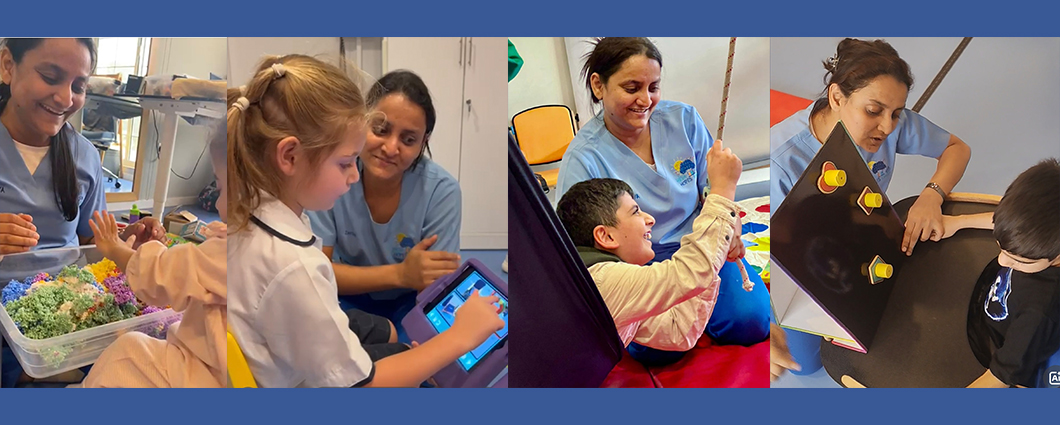
At High Hopes, we believe every child should be seen for who they are, not just through the lens of a diagnosis or the challenges they face. We focus on each child’s strengths, interests, and unique personality.
Rather than trying to change a child, we focus on understanding what helps them succeed. This could mean building new skills, adapting environments, or finding practical ways to support success in daily life.
Some of the ways we support children include:
- Building skills for everyday activities such as dressing, feeding, handwriting, and self-care
- Supporting emotional regulation and helping children understand and express their feelings
- Adapting home, school, and community environments to encourage participation
- Supporting the use of AAC to help children communicate their thoughts, needs, and choices more effectively
- Collaborating with teachers to provide accommodations that help children access learning and participate successfully in the classroom
Moving Forward Together
There is still much work to do to build communities where every child truly belongs. This Disability Pride Month, it is worth taking a moment to reflect:
- What would it look like to celebrate your child just as they are, right now?
- How can we focus less on comparison and more on each child’s own progress?
- How do we create spaces where every child feels welcomed and included?
Helpful Resources for Families
Want to learn more about disability inclusion, self-advocacy, rights, or support services? Here are some friendly organisations that offer practical information and support:
- Disability Visibility Project – Explore real stories and experiences from people with disabilities. It’s a great way to build understanding and connection.
- Autistic Self Advocacy Network (ASAN) –Run by and for autistic people, this group is all about inclusion, self-advocacy, and standing up for your rights.
- Understood.org – Offers practical, easy-to-follow advice for parents about learning and attention differences.
- Americans with Disabilities Act (ADA) –The law that protects the rights of people with disabilities at school, work, and in the community.
- ADA National Network – Provides guidance for answers about disability rights, accommodations, and how to make places accessible for everyone.
- National Disability Rights Network (NDRN) – Offers legal support and advocacy for people with disabilities.
- Challenged Athletes Foundation – Works to ensure people with physical disabilities have opportunities to participate in sport and recreation.
- Dubai Community Development Authority (CDA) – Provides services and support for People of Determination in Dubai, including the handy Sanad card.
- Zayed Higher Organization for People of Determination –Offers programs for rehabilitation, education, jobs, and inclusion across Abu Dhabi.
Final Message
At its heart, Disability Pride Month is a simple reminder:
Every child deserves to be seen, valued, respected, and supported for who they are.
We do not need to change who a child is. We simply support them to thrive in their own way. Our role is to create opportunities, remove barriers, and support children as they grow into the best version of themselves.
At High Hopes, we are grateful to support families as children build confidence, independence, and pride in who they are.
References
- (2024). Zayed Higher Organization for People of Determination. Zayed Higher Organization for People of Determination. https://www.zho.gov.ae/en/Media-Centre/News/Comprehensive-Care-and-Rehabilitation-Services-at-Global-Standards
- (2024). Issue Sanad Card. Community Development Authority.
https://www.cda.gov.ae/en/socialcare/peoplewithdisabilities/pages/sanadcard.aspx - (n.d.). The Americans with Disabilities Act. ADA.gov. https://www.ada.gov/